



 Spring, TX 77386
 (936) 647-0069


Where Did the Water Pressure Drop?
If your water pressure is suddenly low, the cause may be as simple as a clogged faucet aerator or as significant as a hidden leak, faulty pressure regulator, or problem with the main water supply. Checking whether the pressure loss affects one fixture, only the hot water, or the entire house can help narrow down the cause.
At Grand Oaks Plumbing & Drain, we help homeowners identify plumbing problems that can restrict water flow. A sudden pressure drop is worth investigating, particularly when it affects multiple fixtures or appears alongside other signs of a leak.
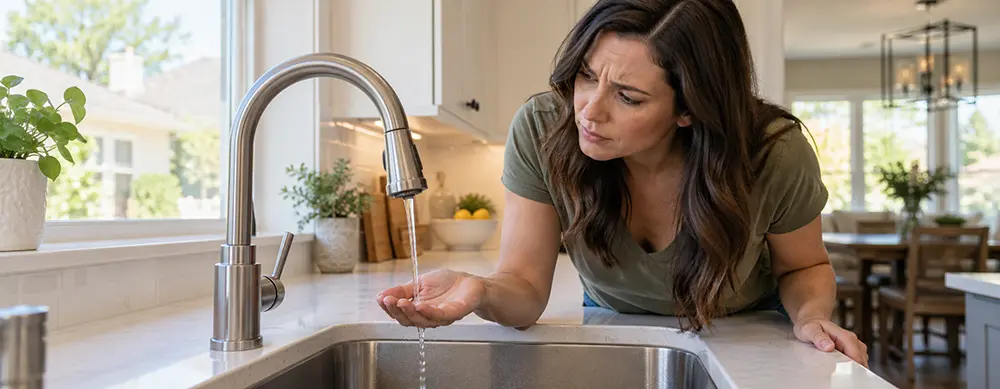
What Can Cause a Sudden Drop in Water Pressure?
Several problems can reduce water flow through your home's plumbing system:
- Clogged fixtures: Mineral deposits or debris in faucet aerators and showerheads can restrict water flow at individual fixtures.
- Partially closed valves: A main shutoff valve or water meter valve that is not fully open may restrict the home's water supply.
- Faulty pressure regulator: A failing pressure regulator can cause pressure changes throughout the house.
- Leaking pipes: Water escaping from a damaged pipe or supply line can contribute to a sudden pressure loss.
- Corroded or restricted pipes: Buildup or deterioration inside older pipes can gradually restrict water flow.
- Municipal supply problems: Water main work, a main break, or another issue with the municipal water supply can temporarily affect pressure in multiple homes.
Determining whether the problem affects one fixture or the entire plumbing system can help identify which of these causes is more likely.
Why Is the Water Pressure Low at Only One Fixture?
If low pressure is limited to one faucet or shower, the problem may be at the fixture itself. A clogged faucet aerator or showerhead can restrict water flow when mineral deposits or debris accumulate.
Check whether nearby fixtures have normal pressure. If they do, the problem is more likely localized rather than a whole-house pressure issue.
What If Only the Hot Water Pressure Is Low?
When cold water pressure is normal but hot water pressure is low throughout the home, the problem may be associated with the hot water system rather than the municipal supply.
A plumber can evaluate the water heater and related plumbing to determine whether buildup, a valve issue, or another restriction is affecting hot water flow.
Could Low Water Pressure Mean You Have a Leak?
Yes. A hidden leak can allow water to escape before it reaches your fixtures, potentially reducing pressure elsewhere in the plumbing system.
Look for other warning signs such as unexplained increases in the water bill, damp areas, water stains, or the sound of running water when fixtures are off. If a leak is suspected but not visible, professional leak detection can help locate the source.
When Should You Call a Plumber for Low Water Pressure?
If pressure suddenly drops throughout the house, continues after basic fixture checks, or occurs alongside signs of a water leak, the plumbing system may need professional evaluation. A plumber can determine whether the problem involves a valve, pressure regulator, damaged pipe, water heater, or another part of the system.
If your water pressure has changed unexpectedly, contact Grand Oaks Plumbing & Drain to have the problem evaluated.
Contact Information
 Phone
 Email
 Location