



 Spring, TX 77386
 (936) 647-0069


Typical Whole-Home Repiping Costs
The cost to repipe a house typically ranges from $9,000 to $16,000 or more. The total cost depends on factors such as the size of the home, number of bathrooms, pipe material, and how difficult the plumbing is to access through walls or ceilings.
At Grand Oaks Plumbing & Drain, we know that whole-house repiping is a significant investment. When recurring leaks or deteriorating pipes point to a larger problem, evaluating the home's pipes and water lines can help determine whether targeted repairs or more extensive pipe replacement may be appropriate.
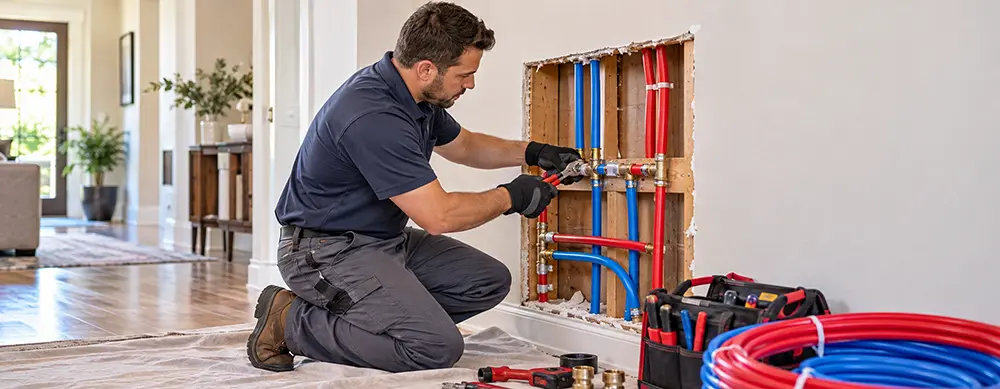
What Factors Affect the Cost to Repipe a House?
No two plumbing systems have exactly the same layout. The amount of piping and labor required can vary considerably from one home to another.
Several factors can influence repiping cost:
- Home size: Larger homes generally require more piping material and labor.
- Number of bathrooms and fixtures: More plumbing fixtures can mean more water supply lines that need to be replaced.
- Pipe material: The material selected for the new pipes can affect material costs and installation requirements.
- Pipe accessibility: Plumbing behind walls, ceilings, or other difficult-to-reach areas may require additional labor.
- Scope of the project: The overall condition and layout of the home's plumbing system determine how extensive the replacement needs to be.
For homeowners comparing larger plumbing projects, our guide to plumbing service costs in Spring, TX provides additional pricing context.
When Should You Consider Repiping Your Home?
A single small leak does not necessarily mean the entire house needs new piping. However, recurring problems throughout the plumbing system may indicate that repairing individual sections is no longer addressing the broader issue. Homes with aging galvanized piping may also warrant a whole-home plumbing evaluation to determine whether repiping is appropriate.
Warning signs that may warrant a professional evaluation include:
- Frequent or recurring leaks
- Visible corrosion on accessible pipes
- Discolored water associated with deteriorating piping
- Persistent low water pressure related to the plumbing system
- Multiple sections of aging or damaged pipe
The cause matters. Low water pressure or discolored water, for example, can have causes unrelated to failing pipes, so these signs should be properly diagnosed before deciding on a whole-house repipe.
Why Can Repiping Costs Vary So Much?
Whole-house repiping is more extensive than replacing one damaged pipe section. A plumber needs to consider the existing plumbing layout, how many supply lines need replacement, where those lines are located, and what material will be used for the new piping.
Access can also affect the scope of the project. Pipes that are difficult to reach through walls or ceilings can require more labor than easily accessible lines. Any necessary restoration to opened walls or other finished surfaces may also need to be considered separately when planning the overall project budget.
How Can You Get an Accurate Repiping Estimate?
Online averages can provide a starting point, but the actual cost to repipe a house depends on the plumbing system and the amount of work required. Grand Oaks' typical whole-home repiping range is $9,000 to $16,000 or more, with home size, bathrooms, and pipe accessibility among the primary cost factors.
Contact Information
 Phone
 Email
 Location